CMS's plan for electronic prior authorization on drugs: what's proposed, what's final, and what happens in 2027

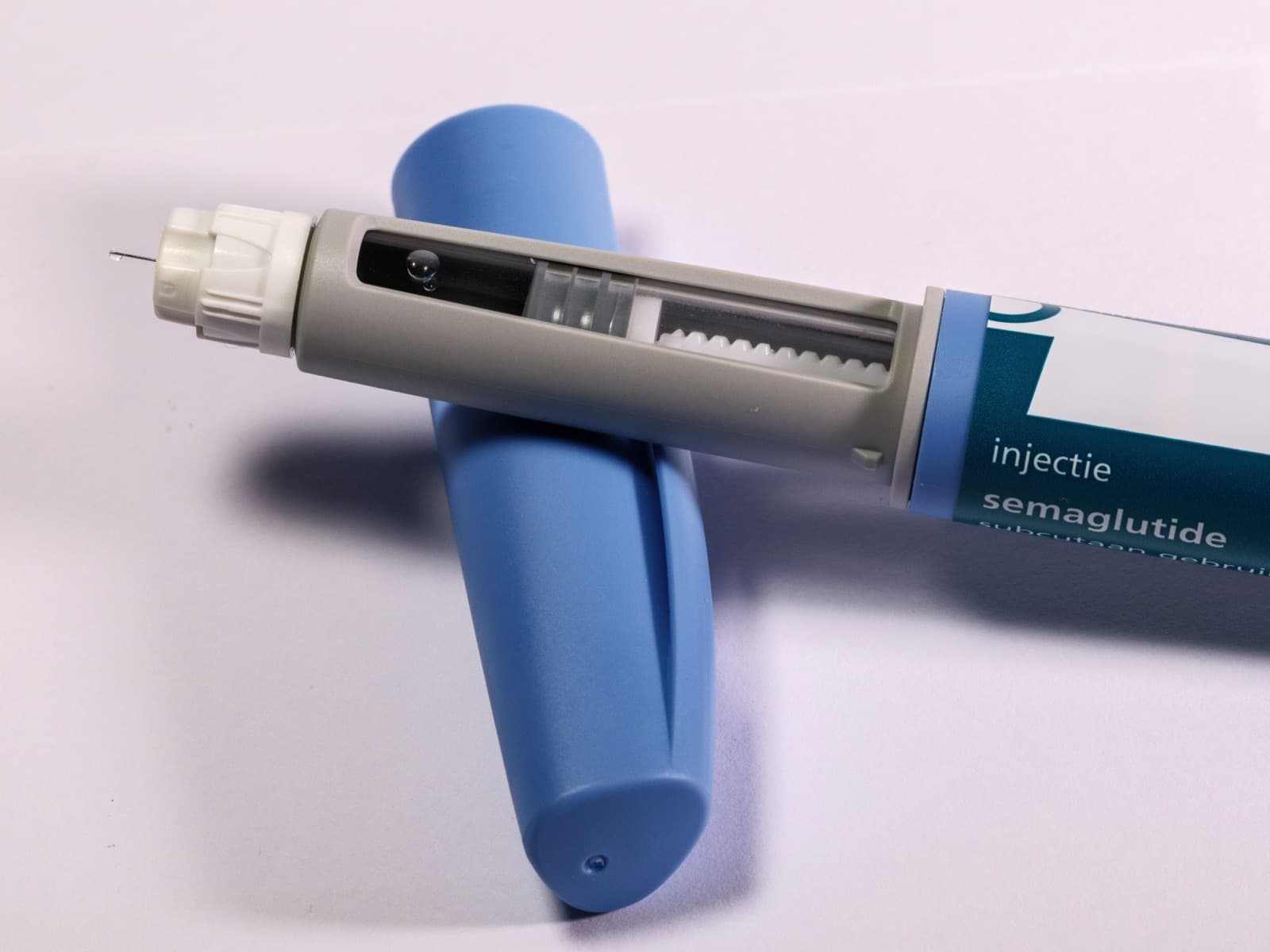
Photo: cottonbro studio on Pexels
A pharmacist still spends real time on hold, chasing a prior authorization that a computer could clear in seconds. CMS has two different rules moving right now, and people keep mixing them up: one is already final and changed deadlines back in January 2026; the other, aimed specifically at drugs, is still just a proposal whose comment period closed in June 2026. This piece separates the two properly, states plainly what CMS has actually decided versus what it has only floated, and gives the one verified date that matters most if you write, dispense, or process Medicaid and Part D prescriptions.
Key takeaways
- CMS has proposed (not finalised) a rule, CMS-0062-P, that would make Medicaid, CHIP, and ACA marketplace plans handle drug prior authorization electronically using the NCPDP SCRIPT standard.
- Public comments on that drug rule closed on 15 June 2026. As of this article, CMS has not published a final version.
- The compliance date CMS proposed for NCPDP SCRIPT is 1 October 2027 — a proposed date, not a locked-in one.
- A separate, already-final rule, CMS-0057-F, covers medical and procedural prior authorization (not drugs), and its deadlines started on 1 January 2026.
- Medicare Part D already runs electronic prior authorization on NCPDP SCRIPT, which is exactly why the new proposal targets other payers rather than Part D.
- Electronic prior authorization speeds up how a request is sent and answered. It does not change whether a plan says yes.
What's actually changing, and why it matters now
Two CMS rules with near-identical names are circulating right now, and the overlap is causing genuine confusion. The first, CMS-0057-F, is finished business: it became law in January 2024 and its operational deadlines started landing on 1 January 2026. It covers prior authorization for medical services and procedures, plus drugs billed under a plan's medical benefit, but it does not touch pharmacy-benefit drugs dispensed at a retail pharmacy.
The second, CMS-0062-P, is the one this article is really about, because it's the one people keep describing as settled when it isn't. Published on 10 April 2026, it would extend electronic prior authorization specifically to prescription drugs for Medicaid, CHIP, and ACA marketplace (QHP) plans, using the same NCPDP SCRIPT standard that Medicare Part D has relied on for years. It matters right now because the public comment window has already closed, which means the rule is in the quiet stretch before CMS decides what survives into a final version. Anyone budgeting a compliance project against its proposed 2027 date needs to know that date isn't fixed yet.
CMS-0062-P, the drug rule, is still a proposal
It's worth being exact about what CMS-0062-P would actually require, because the proposal treats its three NCPDP standards quite differently from one another. The NCPDP SCRIPT standard, used to transmit the prior authorization request and response electronically, is the one CMS proposes to make mandatory for Medicaid, CHIP, and QHP issuers. Two related standards — Formulary & Benefit, which tells a prescriber what a plan actually covers, and Real-Time Prescription Benefit, which shows a patient's likely out-of-pocket cost before the prescription is even sent — are described in the proposal as options CMS is still gathering comment on, not settled requirements.
The proposed compliance date for the NCPDP SCRIPT requirement is 1 October 2027, with CMS floating the possibility of extensions for payers that need more time. Comments closed on 15 June 2026. Both of those facts matter for the same reason: a proposed rule with a closed comment period is closer to becoming law than an open one, but it still isn't law. CMS can, and regularly does, change dates, scope, and specific requirements between a proposed rule and the final version.
| CMS-0062-P (drug rule) | CMS-0057-F (medical rule) | |
|---|---|---|
| Status | Proposed. Comments closed 15 June 2026; not yet finalised | Final. Published January 2024 |
| Scope | Prior authorization for pharmacy-benefit drugs | Prior authorization for medical services, procedures, and drugs billed under the medical benefit |
| Who it applies to | Medicaid, CHIP, and QHP issuers on the federal exchanges | Medicare Advantage, Medicaid managed care, CHIP managed care, and QHP issuers |
| Core requirement | Adopt the NCPDP SCRIPT standard for electronic prior authorization requests | Build and run four FHIR APIs (Patient Access, Provider Access, Payer-to-Payer, Prior Authorization) |
| Compliance date | 1 October 2027, as proposed | 1 January 2026 for decision timeframes; 1 January 2027 for the full API build-out and for state Medicaid/CHIP fee-for-service programs |
What CMS-0057-F already requires, since 2026
Because CMS-0057-F is finalised, its numbers are firmer ground to plan against. From 1 January 2026, Medicare Advantage organisations, Medicaid managed care plans, CHIP managed care entities, and QHP issuers on the federally facilitated exchanges must decide urgent prior authorization requests within 72 hours and standard requests within 7 calendar days, down from the old 14-day standard, and must give a specific reason whenever they deny one. From 1 January 2027, those same payers must have all four of the rule's FHIR-based APIs running, and state Medicaid and CHIP fee-for-service programmes, which had the extra year, must be compliant with the whole rule by that date too.
None of that reaches a drug dispensed at a pharmacy counter under Part D or a Medicaid pharmacy benefit. That gap is precisely the problem CMS-0062-P is trying to close, which is also why the two rules are so easy to conflate: they share an author, a broad goal, and a lot of vocabulary, but they regulate different transactions on different timelines.
Why Medicare Part D is already ahead of this
Part D isn't waiting on either rule, because it already runs on the standard the new proposal wants everyone else to adopt. Part D plans have used NCPDP SCRIPT for electronic prior authorization for years, which is exactly why CMS-0062-P doesn't create new drug-specific obligations for Part D sponsors: the proposal treats Part D as the working example, not a target. What's actually missing across the wider market is the plumbing, not the ambition. Health systems and pharmacy vendors have had the technical capacity to run electronic prior authorization for a long time; getting prescribers to use it instead of a phone or a fax machine has proved the harder half of the problem.
“Imagine the acceleration possible in a treatment plan when a prior authorization is approved in 18 seconds.”
That figure comes from a network already running electronic prior authorization at scale for the medications it supports, and it's a useful reality check in both directions. It shows what's achievable once a request is genuinely electronic end to end. It's also, precisely because it's exceptional enough to publicise, a reminder of how far most prior authorization requests still are from that outcome. A large share of the market is still working through phone calls, faxes, and payer web portals that are electronic in name but manual in practice.
An illustrative example: a pharmacy's workflow after the drug rule takes effect
This scenario is illustrative, not a real case, but it's a fair sketch of the difference the drug rule would make if finalised close to its proposed shape. A prescriber writes a prescription for a Medicaid patient, for a drug flagged as needing prior authorization. Today, in a state that hasn't already modernised its own systems, that often means the pharmacy calls the prescriber's office, someone there manually pulls the chart, faxes the clinical justification to the plan, and everyone waits for a callback or a portal update. Once NCPDP SCRIPT is mandatory for that plan, the same request would instead route automatically at the point of prescribing: the plan's rules engine receives the structured data it needs, most of the back-and-forth phone calls disappear, and a routine approval could land before the patient has even left the surgery. The clinical decision itself doesn't change. What changes is how quickly the paperwork behind that decision moves.
What people get wrong about this rule
- Treating CMS-0062-P as already final. As of this writing, it's a proposed rule with a closed comment period, not a finished one, and CMS can still change its dates and scope.
- Confusing CMS-0062-P (drugs) with CMS-0057-F (medical services and procedures). They're separate rules with separate payers, separate scopes, and separate deadlines.
- Assuming this changes anything for Medicare Part D. Part D already uses NCPDP SCRIPT; the new proposal targets Medicaid, CHIP, and QHP plans that don't yet.
- Assuming electronic prior authorization means instant, automatic approval. It speeds up how a request travels and how fast a plan can respond; it doesn't remove the plan's judgement about whether to approve it.
- Assuming all three NCPDP standards named in the proposal are mandatory. Only SCRIPT is proposed as a firm requirement; Formulary & Benefit and Real-Time Prescription Benefit are still open questions CMS is gathering comment on.
What to watch for next
The next concrete milestone is CMS publishing a final rule, which typically follows a proposed rule by months rather than weeks once a comment period has closed. Until that happens, the honest position is that 1 October 2027 is a target CMS has floated, not a deadline anyone can be cited for missing. Meanwhile, CMS-0057-F keeps moving regardless: its state Medicaid and CHIP fee-for-service deadline of 1 January 2027 is fixed law, not a proposal, and payers still building toward it don't have the luxury of waiting to see how the drug rule turns out.
Frequently asked questions
Is CMS's rule on electronic prior authorization for drugs final?
No. CMS-0062-P is a proposed rule, published on 10 April 2026. Public comments closed on 15 June 2026, but CMS had not published a final rule as of this writing. Its proposed 1 October 2027 compliance date could still change.
What's the difference between CMS-0057-F and CMS-0062-P?
CMS-0057-F is an already-final rule covering prior authorization for medical services, procedures, and medical-benefit drugs, with deadlines starting 1 January 2026. CMS-0062-P is a separate, still-proposed rule that would require electronic prior authorization specifically for pharmacy-benefit drugs, aimed at Medicaid, CHIP, and QHP plans.
Does electronic prior authorization mean a request gets approved instantly?
No. Electronic prior authorization changes how quickly a request and its supporting clinical information travel between prescriber and plan. It doesn't change the plan's underlying coverage rules or guarantee approval; a request can still be denied, just faster.
Does the new proposed rule change anything for Medicare Part D prior authorization?
Not directly. Part D plans have used the NCPDP SCRIPT standard for electronic prior authorization for years already, which is why CMS-0062-P doesn't create new drug-specific requirements for Part D sponsors. The proposal is aimed at bringing Medicaid, CHIP, and QHP plans up to a similar standard.
When would electronic prior authorization for drugs become mandatory?
As proposed, the NCPDP SCRIPT requirement for Medicaid, CHIP, and QHP plans would take effect on 1 October 2027, with possible extensions. That date is only firm once CMS publishes a final rule, which has not yet happened.
Related on Benefily
Sources
- Health Affairs Forefront — Understanding CMS's Proposed Rule Regarding Prior Authorization for Drugs
- Applied Policy — CMS Proposes Interoperability Standards and New Prior Authorization Requirements for Drugs
- Crowell & Moring — CMS Seeks to Expand Interoperability Requirements to Drug Pre-Authorization (FAQ)
- Innovaccer — CMS-0057 Prior Authorization Rule: Requirements, Deadlines, APIs, and Operational Impact
- Surescripts — 2025 Annual Impact Report
Administrative information only. Benefily reports what a payer has published in its own prior-authorization policy as of the effective date shown. It is not medical advice, not a coverage or payment guarantee, and not an authorization. Requirements vary by plan, place of service and member benefits — always verify with the payer before rendering service.
More from News
Does Medicare Cover Wegovy? The 2026 Answer
Does Medicare cover Wegovy? The accurate 2026 answer: the statutory exclusion, the stalled 2024 rule, and the cardiovascular carve-out that does work.

Prior Authorization Denials: What the Data Shows
The newest KFF figures on Medicare Advantage prior authorization: denial rates, appeal rates, and overturn rates, with the exact year each number covers.