Does Medicare cover Wegovy in 2026?
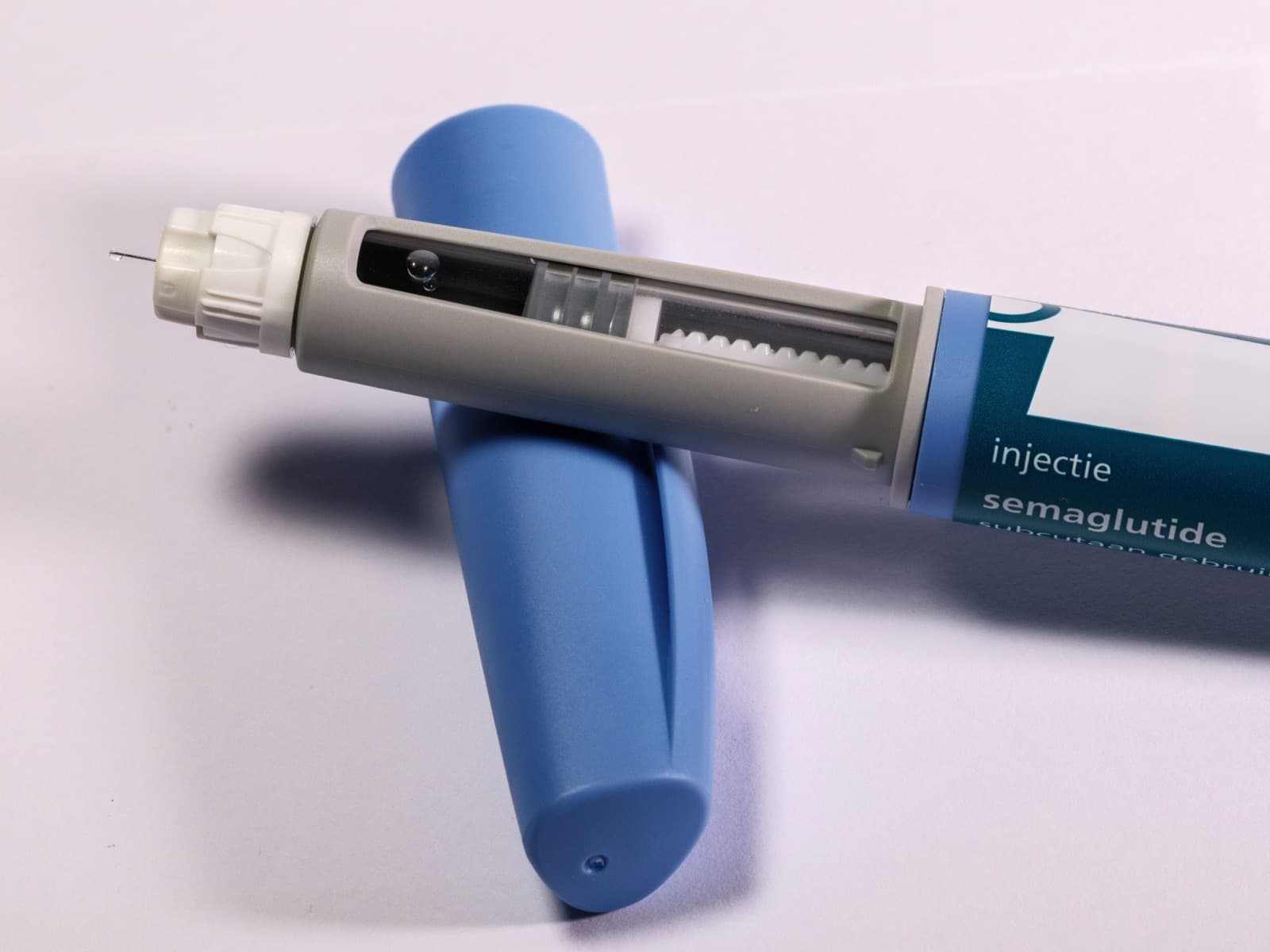
Photo: Haberdoedas Photography on Pexels
Ask whether Medicare covers Wegovy and you'll get three different answers depending on who you ask, and all three used to be defensible. A law dating to Part D's creation blocks coverage for weight-loss drugs outright. A widely reported 2024 proposal to change that never actually took effect. And a genuine, narrower coverage pathway exists alongside a brand-new temporary scheme that only started this summer. This piece works through exactly where the rules stand right now, drawing on CMS's own filings and the health-policy reporting that has tracked this fight since 2024.
Key takeaways
- Medicare Part D still cannot cover a drug prescribed purely for weight loss; the exclusion is written into the same law that lets state Medicaid programmes exclude "agents for weight loss."
- The 2024 proposal to reinterpret that exclusion for obesity was dropped by CMS in its April 2025 final rule for plan year 2026, not enacted.
- The long-standing exception: Wegovy is covered under Part D when prescribed for its FDA-approved cardiovascular-risk-reduction indication in people with established heart disease, not for weight loss itself.
- A new, temporary programme, the Medicare GLP-1 Bridge, began 1 July 2026, offering some enrollees Wegovy or other GLP-1 drugs for $50 a month if their diagnosis and plan qualify, but it runs only through December 2027 and plans choose whether to take part.
- KFF estimates roughly 3.6 million Medicare beneficiaries, about 7% of the whole programme, already had the heart disease and weight profile needed to qualify under the cardiovascular pathway.
- None of this is automatic. Prior authorization, correct diagnosis coding, and plan-specific rules still decide individual outcomes.
Where things actually stand right now
Three separate realities are sitting on top of each other, and mixing them up is the single biggest source of confusion. First, the underlying law hasn't moved: Medicare Part D is still barred from paying for a weight-loss drug just because someone wants to lose weight. Second, a much older and narrower exception has existed since March 2024, letting Wegovy through when it's prescribed for a specific heart-related reason rather than for weight loss. Third, and newest, a temporary $50-a-month scheme launched on 1 July 2026 that sidesteps the weight-loss exclusion altogether, but only for a limited time and only where a plan has opted in. None of these three things replaced the others. They stack.
Why Medicare excludes weight-loss drugs at all
When Congress built Part D in 2003, it borrowed a list of drug categories that state Medicaid programmes are allowed to exclude from coverage, and wrote that same list into Part D's rules under Section 1860D-2(e)(2)(A) of the Social Security Act. One entry on that list covers "agents when used for anorexia, weight loss, or weight gain." CMS confirmed in 2008 regulations that this applies even when the weight-loss use isn't cosmetic, obesity included. That's the entire legal basis for a drug like Wegovy being refused when the stated reason is weight management: it isn't a judgement about whether the drug works, it's a category exclusion baked into the statute itself.
The 2024 proposal that could have changed everything, and didn't
In November 2024, under the outgoing administration, CMS proposed reinterpreting that exclusion so obesity itself would count as a disease worthy of treatment, rather than something drugs are merely used "for weight loss" to manage. The agency estimated it could extend Part D and Medicaid coverage to roughly 3.4 million more people. It was, by most accounts, the biggest potential change to obesity-drug access in Medicare's history.
It didn't happen. When CMS published its final rule for contract year 2026 in April 2025, it declined to finalise the anti-obesity medication provisions, citing Executive Order 14192, "Unleashing Prosperity Through Deregulation," and calling the change "not appropriate at this time." Trade reporting since then suggests CMS may revisit the question later, pending review of the drugs' benefits and cost, but no rule is pending and no timeline has been announced. If you've read that Medicare "now covers Wegovy for obesity" because of the 2024 proposal, that claim is out of date. The proposal is dead for now, not delayed.
| Pathway | Covered under standard Part D? | Why |
|---|---|---|
| Weight loss or obesity treatment alone | No | Statutorily excluded under SSA §1860D-2(e)(2)(A); the 2024 proposal to change this was not finalised in the CY2026 rule |
| Cardiovascular risk reduction (established heart disease plus obesity or overweight) | Yes, subject to prior authorization | FDA granted Wegovy this indication in March 2024; the prescribing purpose sits outside the weight-loss exclusion |
| Type 2 diabetes (e.g. Ozempic, Mounjaro, Rybelsus) | Yes, subject to formulary and plan rules | An anti-diabetic indication has never fallen under the weight-loss exclusion |
The genuine loophole: cardiovascular risk reduction
This is the one part of the story that's easy to get right, and worth explaining carefully because it's the actual, working route to coverage today. In March 2024, the FDA approved Wegovy to reduce the risk of major cardiovascular events, specifically heart attack, stroke, and cardiovascular death, in adults who already have established cardiovascular disease and who are living with obesity or are overweight. Because that use exists to protect the heart rather than to shed weight, CMS treats it as falling outside the weight-loss exclusion, and Part D plans can cover it.
The catch is in the paperwork, not the pharmacology. Coverage depends on the diagnosis code and clinical documentation submitted with the prior authorization request genuinely reflecting cardiovascular disease as the reason for the prescription, not obesity or weight management. A plan reviewing the request is checking that the record matches the FDA-approved indication, not simply that a cardiologist signed the script.
“An estimated 7% of Medicare beneficiaries, or 3.6 million overall, had established cardiovascular disease and obesity or overweight in 2020.”
That's a meaningful slice of the Medicare population who could plausibly qualify through the cardiovascular pathway alone, well before either the failed 2024 proposal or the new bridge programme entered the picture.
The new wrinkle for 2026: the Medicare GLP-1 Bridge
The most recent development is the Medicare GLP-1 Bridge, a temporary demonstration that started on 1 July 2026 and is due to run through 31 December 2027. Built under CMS's Section 402 demonstration authority rather than a permanent change to Part D's formulary rules, it lets eligible enrollees access certain GLP-1 drugs, including Wegovy, Zepbound, and the newer oral drug Foundayo, for a flat $50 monthly copay when used to reduce excess body weight, provided they meet prior authorization criteria and their plan has chosen to participate. It sits alongside a broader initiative, the BALANCE Model, whose Medicaid component is rolling out from May 2026, but whose Part D piece has been pushed back indefinitely, with the Bridge extended to cover the gap.
It's worth being precise about what this is and isn't. It is not a repeal of the statutory weight-loss exclusion, and it is not automatic: participation is voluntary for Part D plans, and eligibility still runs through prior authorization. It's best understood as a time-limited, opt-in pressure valve that CMS built while the underlying legal and political question remains unresolved, not the ending to this story.
What people get wrong about Wegovy and Medicare right now
- Assuming the 2024 proposed rule already took effect. It didn't; CMS declined to finalise it in April 2025 and cited deregulation policy as the reason.
- Assuming every Part D plan handles the cardiovascular-risk-reduction carve-out identically. Prior authorization criteria, required documentation, and turnaround times vary by plan.
- Assuming a cardiologist's prescription alone guarantees approval. The coverage determination hinges on the diagnosis code and clinical notes showing cardiovascular disease as the reason, not obesity.
- Assuming the new $50 GLP-1 Bridge is permanent or available everywhere. It's a temporary demonstration running only to the end of 2027, and each plan decides whether to join.
- Assuming a Part D denial for weight loss means no public coverage exists anywhere. Medicaid coverage of anti-obesity medications varies by state; roughly 13 states covered the obesity indication as of January 2026.
Two requests, two outcomes: an illustrative example
These two scenarios are illustrative composites, not real people, but they show how the same drug produces opposite results depending on the paperwork behind it.
A 68-year-old with a documented history of coronary artery disease and a BMI of 31 sees a cardiologist, who prescribes Wegovy specifically to reduce the risk of a further cardiac event, and submits the request coded to atherosclerotic cardiovascular disease with obesity as a secondary factor. The plan approves it within its standard prior authorization window, because the record matches the FDA's cardiovascular indication precisely.
A 58-year-old with no diagnosed heart disease and a BMI of 33 asks their primary care physician for Wegovy to lose weight. The prescriber submits the request coded to obesity, with weight management stated as the reason. The plan declines it, citing the statutory exclusion, and the enrollee's plan happens not to participate in the GLP-1 Bridge, so the temporary $50 pathway isn't available to them either. Nothing about the drug changed between the two cases; the diagnosis and documented reason did.
Will Medicare ever cover Wegovy for weight loss outright?
Nobody can answer that with certainty, and it's worth being honest about that rather than guessing. KFF has estimated the ten-year cost of covering anti-obesity medications broadly could run to $25 to $35 billion for Medicare alone, a number that shapes political appetite as much as any clinical argument. The administration cited deregulation policy, not the drugs' effectiveness, when it dropped the 2024 proposal, and trade press reports CMS may reconsider later depending on further review of costs and benefits. The GLP-1 Bridge shows CMS is willing to experiment with narrower, time-limited access rather than a permanent rule change. Whether that becomes a stepping stone to broader coverage, or simply expires in December 2027, is genuinely unsettled, and anyone claiming otherwise is speculating past what the record supports.
This article is general information, drawn from CMS filings and health-policy reporting, not medical advice or a guarantee of coverage. Every plan applies its own prior authorization criteria, so confirm your specific situation with your prescriber and your Part D plan before assuming any outcome.
Frequently asked questions
Does Medicare cover Wegovy for weight loss?
Not through standard Part D coverage. The statutory exclusion on weight-loss drugs still applies. The two current routes around it are the cardiovascular-risk-reduction indication for people with established heart disease, and the temporary Medicare GLP-1 Bridge, which offers a $50 monthly copay from July 2026 through December 2027 if your plan participates.
Will Medicare ever cover Wegovy for weight loss outright?
It's genuinely uncertain. CMS proposed reinterpreting the exclusion in 2024 but declined to finalise it in April 2025, citing deregulation policy rather than a clinical objection. Reporting suggests CMS may revisit the question later, but there is no pending rule or announced timeline as of publication.
Does Medicare cover Wegovy for cardiovascular disease?
Yes, subject to prior authorization. The FDA approved Wegovy in March 2024 to reduce cardiovascular risk in adults with established heart disease and obesity or overweight, and that use falls outside the weight-loss exclusion. Coverage depends on the request being coded and documented to reflect cardiovascular disease as the reason, not weight management.
What is the Medicare GLP-1 Bridge, and is it the same as full coverage?
It's a temporary demonstration programme, not a permanent change to Part D. Starting 1 July 2026 and running through 31 December 2027, it lets eligible enrollees access certain GLP-1 drugs, including Wegovy, for a $50 monthly copay if they meet prior authorization criteria and their plan has chosen to take part. Participation is voluntary for plans, so it isn't guaranteed everywhere.
Will a cardiologist's prescription guarantee my Wegovy is approved?
No. Approval depends on the diagnosis code and clinical documentation submitted with the prior authorization request actually matching the FDA's cardiovascular indication. A prescription alone, without the correct coding and supporting notes, can still be declined.
Related on Benefily
Sources
- KFF — What to Know About the BALANCE Model for GLP-1s in Medicare and Medicaid and the Medicare GLP-1 Bridge
- KFF — A New Use for Wegovy Opens the Door to Medicare Coverage for Millions of People with Obesity
- Sidley Austin — CMS Reverses Course on Certain Medicare Advantage and Part D Proposals
- Applied Policy — CMS Finalizes CY 2026 Changes to Medicare Advantage and Part D Without Key Provisions Related to Access to Anti-Obesity Medications and Health Equity
- CMS — Medicare GLP-1 Bridge
Administrative information only. Benefily reports what a payer has published in its own prior-authorization policy as of the effective date shown. It is not medical advice, not a coverage or payment guarantee, and not an authorization. Requirements vary by plan, place of service and member benefits — always verify with the payer before rendering service.
More from News

CMS's Electronic Prior Authorization Rule, Explained
CMS has proposed electronic prior authorization for drugs, but the rule isn't final. Here's the real status, the verified dates, and what's already law.

Prior Authorization Denials: What the Data Shows
The newest KFF figures on Medicare Advantage prior authorization: denial rates, appeal rates, and overturn rates, with the exact year each number covers.